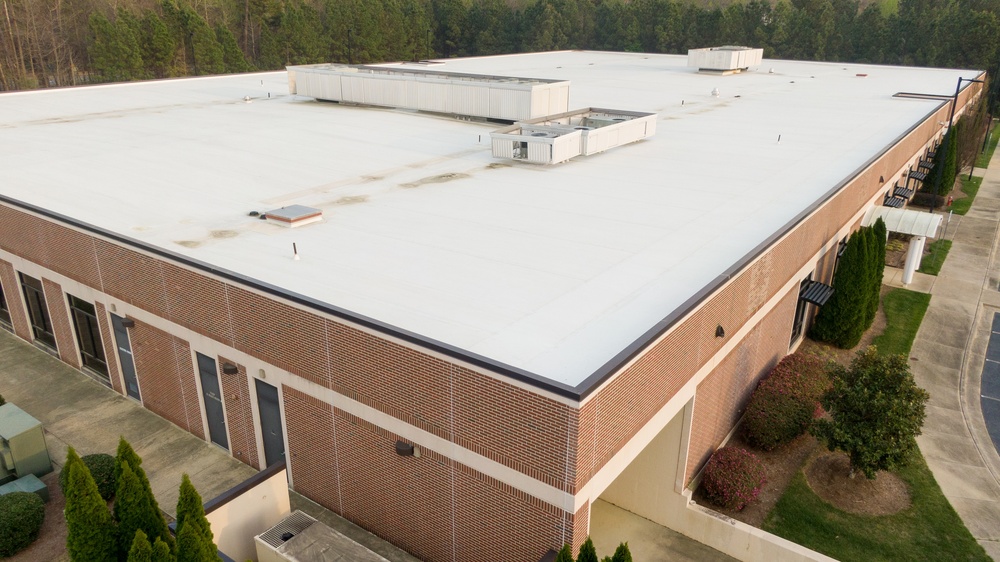
After a heavy storm, some water may remain on a flat roof for a short time. The problem begins when the water does not drain and stays in the same areas. New Orleans receives heavy rain, and one storm can place a large amount of water on a business property. Pooling may point to blocked drains, low areas, or damage beneath the surface. Synergy Roofing provides commercial roofing in New Orleans for business owners who need help protecting their buildings from standing water and roof leaks.
Clogged Drains Stop Water From Leaving
Commercial flat roofs use drains, gutters, scuppers, or downspouts to move rainwater away from the building. Leaves, dirt, branches, roofing material, and trash can block these parts. When a roof drain becomes clogged, water collects around it and spreads across the roof. One blocked drain can leave a large section of the building covered in water after a storm. Regular cleaning can prevent many drainage problems, but the surrounding commercial roof should also be checked for damage caused by water that has already been sitting there.
The Roof Does Not Have the Right Slope
A flat roof is not fully flat. It should have a slight slope that guides water toward the drains. If the roof was installed with the wrong slope, rainwater may move toward the center or collect far from the drainage points. Parts of the building can also settle over time and create new low spots. A professional inspection can show whether the roof slope is moving water in the right direction. If it is not, the building may need added drainage, tapered insulation, or another flat roof repair based on the condition of the system.
Wet or Compressed Insulation Creates Low Areas
Commercial roofs often have insulation beneath the outer membrane. This insulation may become compressed by heavy equipment, repeated foot traffic, or water that has entered through a leak. When the material sinks, the surface above it can form a low area where rain collects. Wet insulation can also hold moisture inside the roofing system and make the problem worse. A roofer may need to check below the roof membrane to learn how far the damage has spread. Replacing the affected roof insulation can restore the surface and help water flow toward the drains again.
The Roofing Membrane Has Shifted or Sagged
A commercial flat roof usually has a membrane that keeps water outside the building. Heat, age, poor installation, and trapped moisture can cause this material to wrinkle, loosen, or sag. Water may then collect inside these uneven areas instead of moving toward a drain. Seams may also begin to separate under the weight of the water. This can lead to a commercial roof leak that damages ceilings, walls, equipment, or stored goods. A professional working on a commercial flat roof in New Orleans can inspect the membrane and find weak areas before the damage grows.
Heavy Rain Can Overload the Drainage System
New Orleans storms can drop a large amount of rain in a short period. Even a working drainage system may struggle if the drains are too small, poorly placed, or already partly blocked. Water may rise faster than it can leave the roof. If it drains soon after the storm, the system may still be working. If it remains for a long time, the roof needs attention. An inspection can show whether the building needs more roof drainage or repairs around the existing drains. Improving the drainage system can reduce pooling during future storms.
HVAC Equipment Can Affect Water Flow
Many commercial buildings have heating and cooling equipment on the roof. The supports beneath these units can create low spots or block the path water uses to reach a drain. Workers who service the equipment may also leave tools, screws, filters, or packaging behind. These items can damage the surface or clog a nearby drain. Frequent foot traffic around rooftop HVAC units can wear down the membrane as well. Walk pads and clear drainage paths can help protect the flat roofing system while giving service workers safe access to the equipment.
Pooling Water Can Damage Your Business
Standing water places extra weight on a commercial roof. It can weaken seams, wear down coatings, and enter through small openings. Once water reaches the building, it may damage inventory, office furniture, insulation, electrical parts, or tenant spaces. A leak can also interrupt daily work and force a business to close part of the property. Early commercial roof maintenance can reduce these risks and protect the building from larger repair costs. Business owners should also watch for ceiling stains, musty smells, bubbling surfaces, and other signs of water damage.
Schedule a Commercial Roof Inspection
Do not climb onto a wet commercial roof or try to open a drain during a storm. The surface may be slippery, and deep water can hide damaged areas. After the weather clears, Synergy Roofing can inspect the drains, membrane, seams, insulation, and slope to find the cause of the pooling. Our team provides commercial roofing in New Orleans for offices, stores, warehouses, and other business properties. Contact us today to schedule a commercial roof inspection and protect your building before the next heavy rain.